
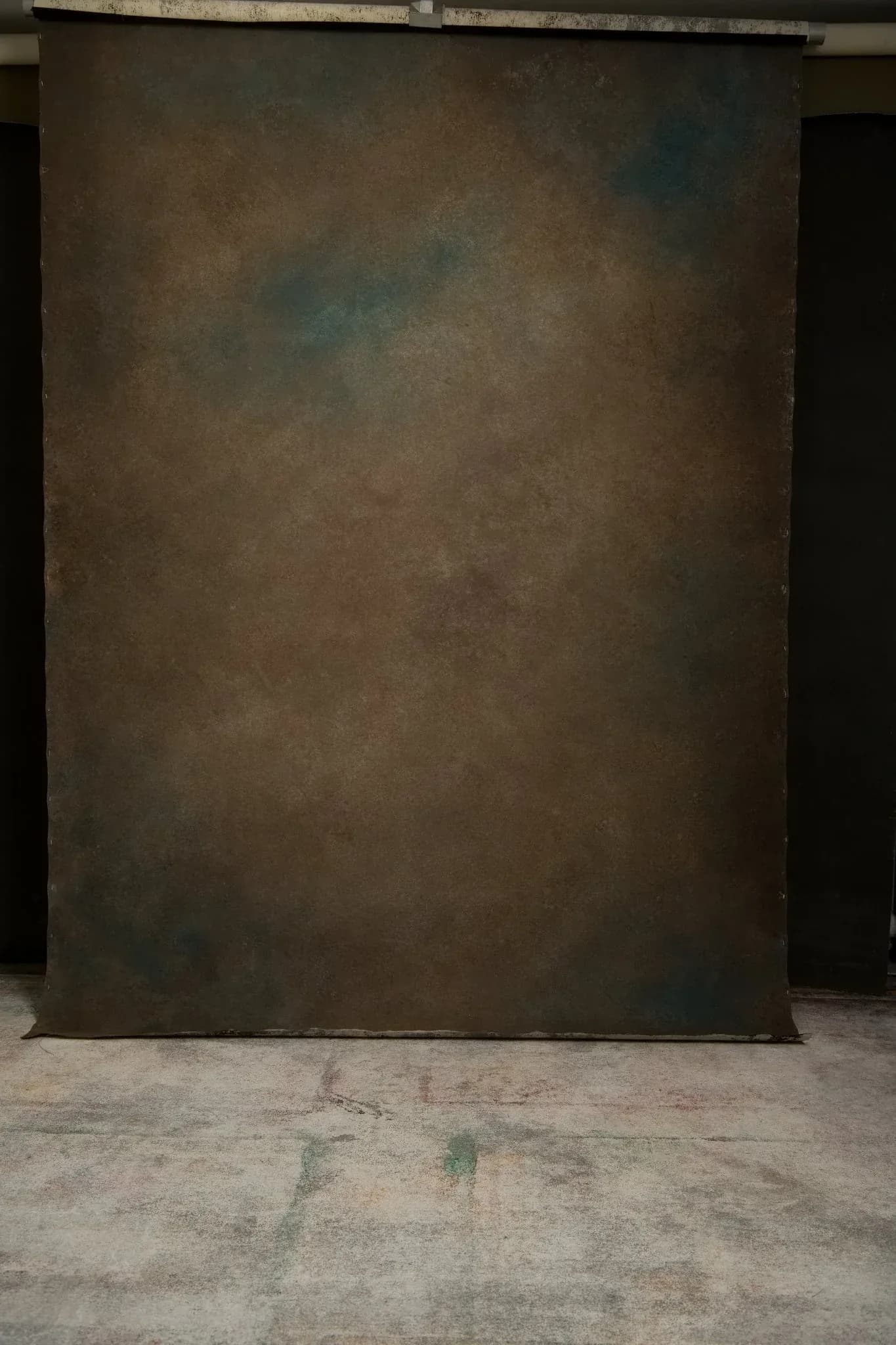
Most "best backdrops" lists are really brand lists, and half the brands on them paid to be there. The more useful question is which material suits the work you actually do, because each one solves a different problem. I paint canvas for a living, so you know where my bread is buttered, but I've owned and shot against all five of these and I'll tell you honestly where each wins.
Seamless paper
The workhorse. A 2.72 m roll of Colorama or Savage costs somewhere around £60 to £95 in the UK and gives you a perfectly even tone that retouches like a dream. High-key white, product work on a sweep, anything where the background should disappear: paper. Its weaknesses are physical. It creases if you look at it wrong, the floor edge shreds after a few sessions, and you cut off the damage and the roll slowly shrinks. Treat it as a consumable, budget a couple of rolls a year, and it never disappoints.
Vinyl
Wipeable, which is the whole point. Cake smashes, pets, food splatter, muddy boots. A decent UK vinyl runs £40 to £120 depending on size. It photographs flat, in both senses, and it can catch a sheen under big soft light if you angle it badly, but nothing else survives a toddler with a chocolate cake the way vinyl does. We keep a small range of paper and vinyl backgrounds in stock alongside our own canvas, because a working studio needs both.
Printed backdrops
This is the crowded end of the market. Kate Backdrop and D Backdrop sell thousands of printed designs from about £24, and UK printers like Studio Backdrops will run custom designs with fast dispatch. For themed newborn sets, cake smash scenes and event walls, printed is exactly right: you're buying a picture, and a printer reproduces a picture better than a brush ever will. Where it falls down is close inspection. A printed texture is the photograph of a texture, so it has no depth of its own, and on a large seamless print you can sometimes spot the repeat. Fine at a metre's distance behind a one-year-old. Less fine behind a CEO.
Muslin
Cheap, light, washable, folds to nothing. £20 to £60 buys one, and for location work it's genuinely the right answer, not a compromise. I wrote a full muslin versus canvas comparison if you want the long version, including the maths on cost per shoot, which is closer than backdrop sellers like to admit.
Hand-painted canvas
What I make, so weigh my opinion accordingly. A painted canvas is layers of pigment on heavy cotton duck, and the layers are what you're paying for: the colour shifts across the cloth, texture catches side light, and the background carries depth without any work in post. It's the material for portraits that need to feel considered. It is also the expensive option, and heavy, and it must live rolled on a core rather than folded.
You have real choices in Britain. Our own in-stock range runs from £170 for a 100 × 135 cm headshot canvas to £860 for a 270 × 430 cm wall, painted in our studio and shipped rolled.
So which one
Buy for the job in front of you. A studio doing headshots and family portraits earns its keep fastest with one painted canvas in a mid grey or warm neutral plus a roll of white paper. A location shooter wants muslin and nothing else until the car gets bigger. Newborn and cake-smash photographers should own vinyl and a stack of printed designs and spend the difference on lighting. And if you're not sure yet, our size and price list shows what the painted end of the pool costs before you dive in.