
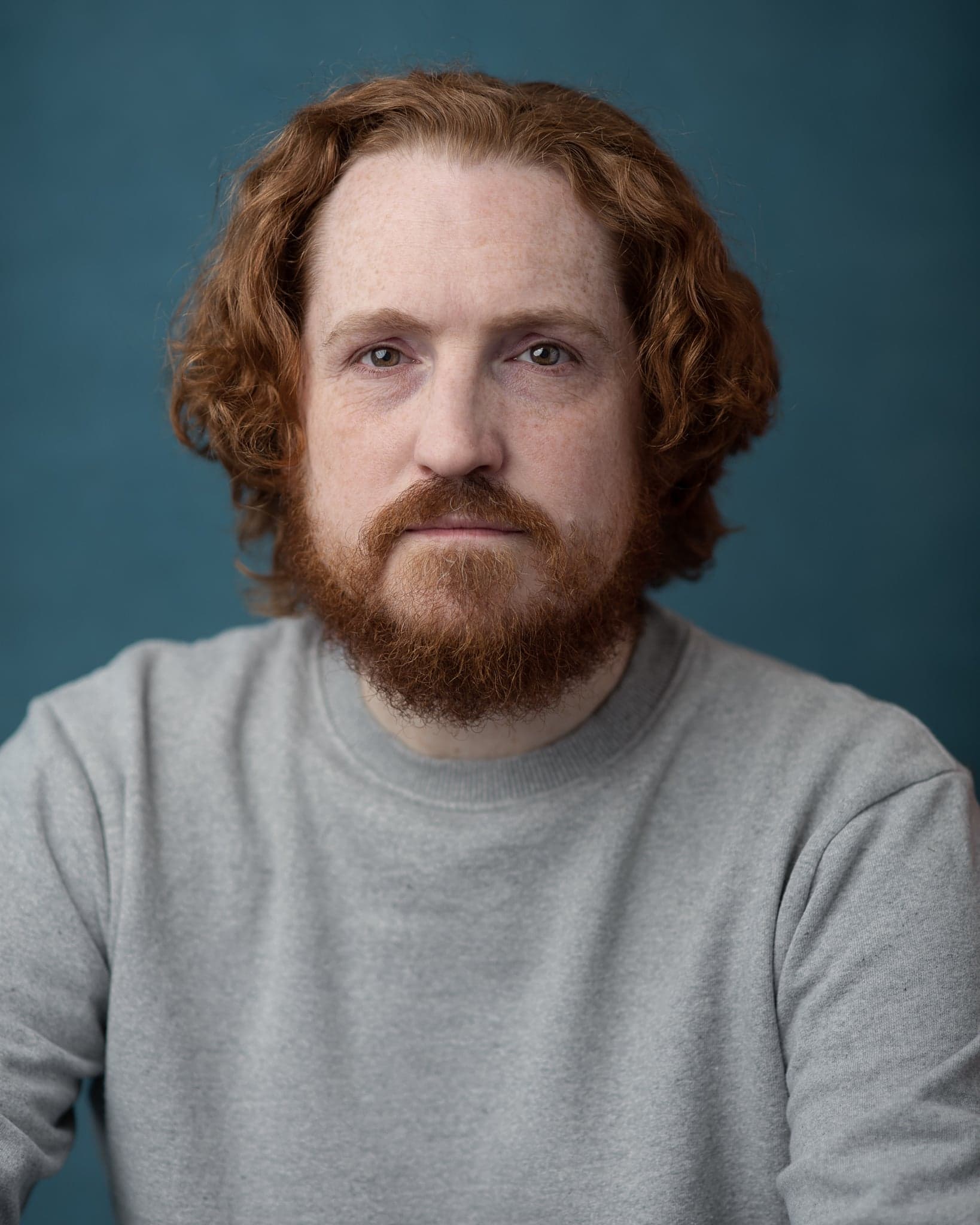
A headshot background has to do two things that argue with each other. Get out of the way behind the person, and still look like something. The questions that follow are narrow because of that. Which grey. Is blue a risk. How big before big enough.
I paint these for a living, so take the enthusiasm with salt. This is the answer I'd want two days before a corporate day with the choice still open.
What colour background is best for a headshot?
Mid grey, if you only get one. It sits under almost every skin tone, it won't throw a colour cast back onto a white collar, and it survives the wardrobe lottery of a corporate day: navy suits, black polo necks, the one person in a red dress. Grey gives you somewhere to go, too. Most headshot photographers would rather change how bright the background looks with their lighting than own four backgrounds.
Grey isn't one colour, though. A light grey keeps a face open and a bit friendlier, which suits the firm that wants everyone smiling on the team page. A deep charcoal does the opposite. The face comes forward, and it tends to hold up better when the picture ends up printed at postage-stamp size next to a bio. A London headshot studio that photographs a lot of people bought a dark grey 270 × 340 from us. Most of the grey canvases here live between those two, in the unglamorous middle where headshots belong.
Blue, and the warm neutrals nobody asks for by name
Blue is the colour clients request. A deep slate or a muted navy reads almost neutral in a head-and-shoulders crop, and it does one thing grey can't: it holds a dark suit apart from the background without you lighting the background separately. Be careful with the brighter, more saturated blues. They can push a cool cast into pale skin, and the fix is usually a light you hadn't planned to carry. The blues I'd pick for headshots are the ones that look nearly grey in the thumbnail and only admit to being blue once the file is open.
Warm neutrals get overlooked here. Sand, putty, a warm stone, the colour of a digestive biscuit. They're kind to warm and deeper skin tones, and they stop a headshot looking quite so corporate, which therapists, authors and small consultancies tend to want without saying so. One trap: a cream shirt in front of a warm neutral can go mushy, because there's nothing between the collar and the wall behind it. Ask what people are wearing first.
Why painted canvas beats a printed scene or a paper roll
Printed office backgrounds keep turning up because they're cheap and you know what you're getting. Two things give them away. On a team page, forty people stand in front of the same fictional window. And at wider apertures a printed blur doesn't behave the way real distance does, so it reads as a picture of an office rather than an office.
Paper is more honest, and for a day or two I've nothing against it. It's also exactly one tone, the same tone everywhere, so a single light will often leave a hotspot in the middle with nothing in the surface to break it up. Paper is also a consumable. Forty people through a room, heels and chair wheels, and the bottom metre is scuffed before lunch.
Every canvas I paint happens once and never gets repeated, so the tone shifts gently as it crosses the surface. Lighter through the middle and deeper towards the edges is the usual pattern, and in a head-and-shoulders frame that gives you a little shape before your lights have done anything at all. The texture is painted rather than printed, so it never tiles. Canvas rolls up, hangs, and gets rolled again for years, which matters the day a client comes back wanting matching headshots for the three people who joined in March.
The sizes a headshot day actually needs
Headshots are the one job where buying small is defensible, because you're cropping at the chest anyway. Four sizes cover nearly everything I sell into this work.
- 100 × 135, £170. Enough for head and shoulders if your sitter stays put in the chair and you're tidy about framing.
- 122 × 180, £290. The one I'd buy first. That extra width forgives somebody who turns, and a seated three-quarter still fits.
- 180 × 270, £430. Now they can stand up, and two founders side by side will squeeze in.
- 270 × 340, £680. What the busy studios buy. Nobody reframes between sitters and a queue of thirty keeps moving.
Every cut and what it really costs is on the sizes and prices page, and the number there is the number you pay.
Brand colour is the other headshot conversation, and it's usually the awkward one. A company wants their exact green behind all ninety staff, printed is the cheap route, and it looks it. I'll paint a colour to order instead, with one honest caveat: paint isn't ink, so I get close to a brand colour rather than matching it to the swatch. It takes a few weeks and it comes back as a one-off canvas rather than wallpaper. Tell me what people will be wearing in front of it while you're at it, because that changes my advice more than the swatch does.