
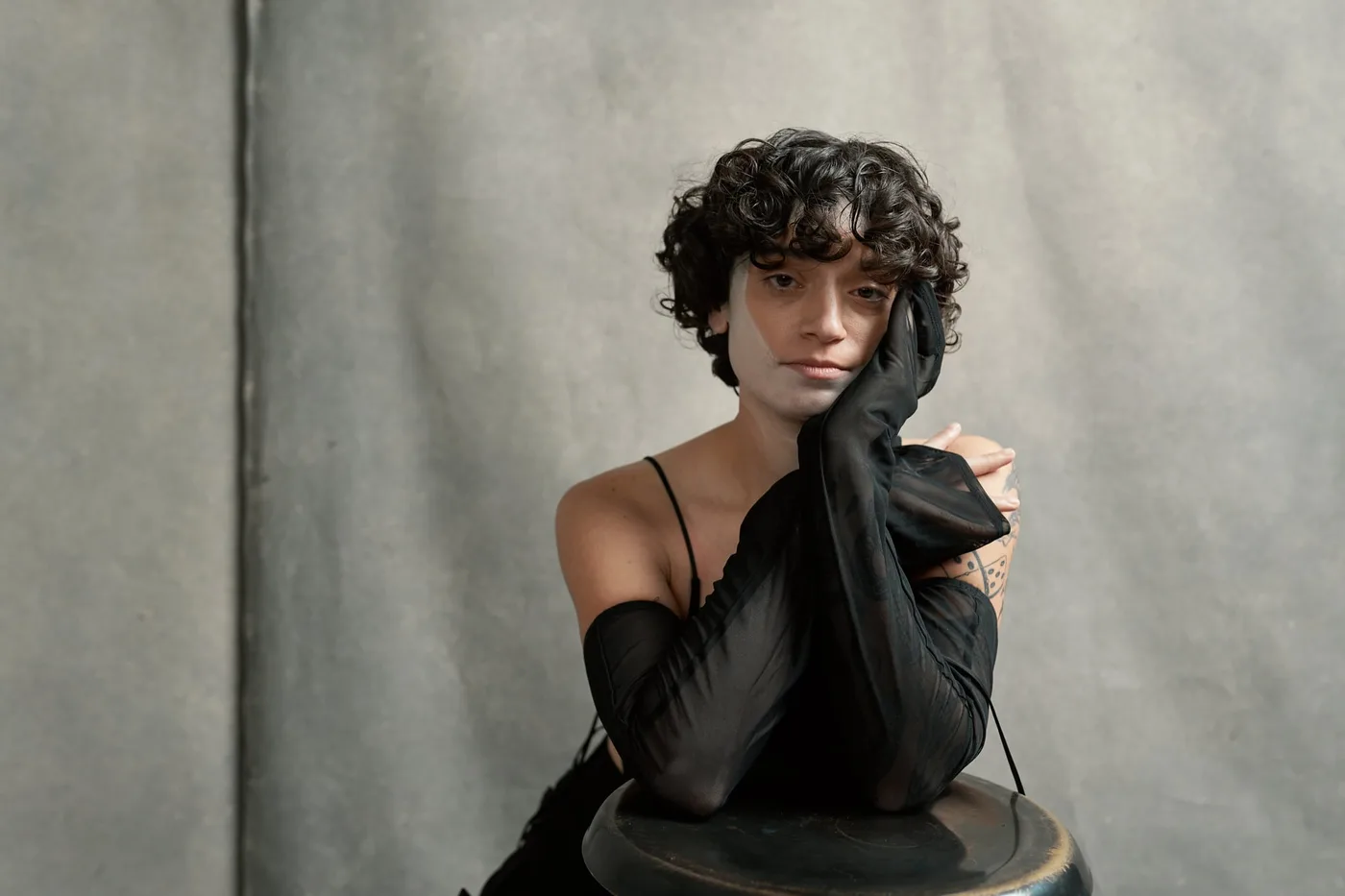
Actors ask us this most weeks, and it's nearly always the night before a tape is due. What do I put behind me? I'll skip the suspense. A mid grey hand-painted canvas, medium or low texture, hung far enough behind you that the light falls off before it lands. Everything after this paragraph is why.
The brief actors repeat back to me barely changes. Casting wants the face. No bookshelf, no radiator, no doorframe slicing the corner of the frame, nothing behind you doing anything interesting enough to pull an eye off the read. That's an easy thing to describe and a surprisingly annoying thing to achieve in a spare bedroom.
Why grey, and not something friendlier
Grey is doing two jobs at once and the two don't get on. Go too light and a pale shirt blows out against it, so casting gets a glowing torso with a face parked somewhere above it. Go too dark and dark hair welds itself to the background, and now you're a silhouette with a voice. Mid grey is the bit in the middle where neither thing happens. I didn't reason my way to that, by the way. Actors kept coming back for it having bought something else first.
Second reason, less technical. Colour is a choice, and a tape is a rotten place to be making choices. A teal or a deep red behind you is something the viewer has to account for, and anything they account for is attention off your read. Grey doesn't ask to be accounted for. It also holds up under whatever mix of daylight and cheap lamp your room throws at it, which a warm brown really doesn't.
Why a canvas, and not the wall
People push back here and they're right to, because the wall is already there and it's free. Trouble is, a flat wall photographs exactly as flat as it is. One soft light, one even tone, nothing happening anywhere across it, and what you send off looks like a bedroom with somebody standing in it.
Paint drifts. A shade deeper in one corner, a touch warmer in another, and you won't consciously clock any of it. What you will clock is that you're sitting off the background rather than against it, with nothing on screen for a casting director to wander over and look at. Stay on the medium and low texture shelf for this. The strong texture canvases were painted to be looked at, and in a tape they will be.
The grey shelf is where I'd start. If you want a reference for the tone, Warm Grey Staple at £170 is precisely it: warm enough that it doesn't turn cold and blue on skin, calm enough to sit behind you and be quiet. That particular one is the 100 × 135 cm headshot cut, so for taping you want the same sort of grey a rung or two up the ladder.
Two things that matter more than the colour
Stand off it. Half a metre between your back and the canvas, more if the room lets you have it. Light spilling past you then has further to travel before it lands, so that hard shadow behind your head, the one in every tape ever shot against a wall, simply stops happening. The background drops a touch darker than you at the same time. Costs nothing, and beats most of what you could buy instead.
Then frame for the crop you're actually sending. Most tapes are chest up and seated, and 122 × 180 cm at £290 covers that with room to lean and gesture. If you stand for movement briefs, or the scene needs your hands in shot, go to 180 × 270 cm at £430 and stop thinking about the edges altogether. Buy smaller than that and you'll spend the take wondering whether the corner of the room crept into frame, and wondering shows on camera.
One honest aside before you spend anything. If tapes are the only reason you're buying, a plain matte vinyl will do this job and wipes clean, so buy that instead and put the difference toward a light. Canvas is for people who want the thing for photographs as well. And no, none of this applies to a passport photo, which needs a genuinely blank background of the sort I make a point of not painting.
So: grey, low or medium texture, half a metre of air behind you. The rest of the tape is your problem rather than the backdrop's.